
Lesson overview
Discuss benefits and risks of automation, AI systems, bias and unequal access to technology.
Focus: AI, automation and the digital divide.
What you will learn
- Define the key GCSE Computer Science terms used in ai, automation and the digital divide.
- Explain how automation works in a practical scenario.
- Compare bias with an alternative or related method.
- Apply ai, automation and the digital divide accurately in exam-style questions.
Before you start
- Algorithms.
- Data privacy and ethics.
- Impact evaluation.
AI and Automation scenarios
Use the factory robot, AI recommendation and online homework examples below to evaluate social impacts.
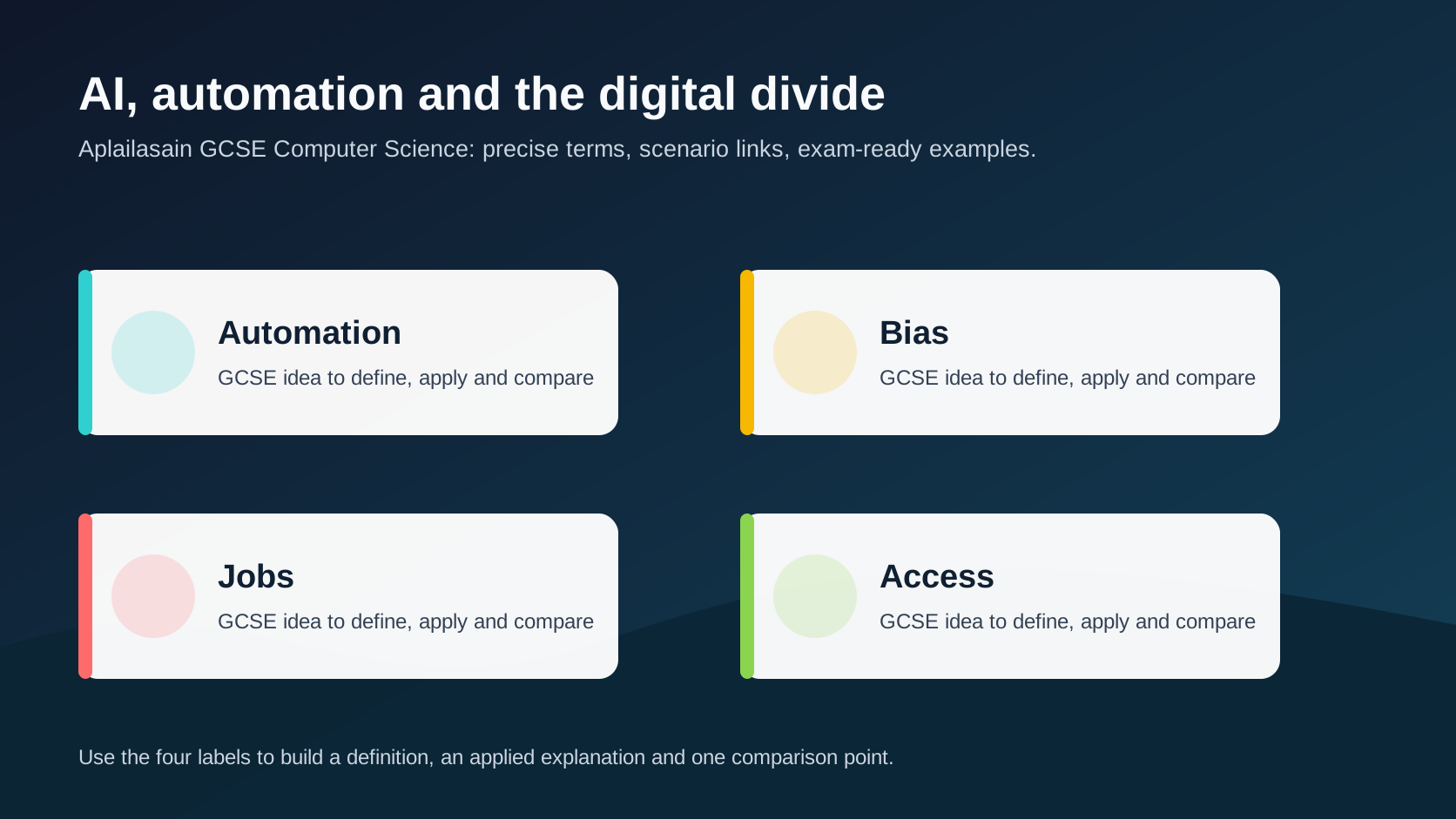
AI, automation and the digital divide infographic
Explanation
Automation uses computer-controlled systems to perform tasks with limited human intervention. It can improve speed, consistency and safety, but may change jobs and required skills.
AI systems use data and models to make predictions or decisions. If data is biased or incomplete, outputs can be unfair or unreliable.
The digital divide describes unequal access to devices, connectivity, skills or support, which can affect education, work and services.
Worked examples
Applying ai and automation
A school moves all homework to an online platform.
Some pupils have shared devices or unreliable internet.
Teachers can mark work more efficiently.
Answer: The system has efficiency benefits but may widen the digital divide unless access and support are provided.
Quick checks
1. What is the digital divide?
- a. Unequal access to technology, internet or digital skills
- b. A CPU register
- c. A type of SQL join
Reveal answer
Answer: a. Correct. The divide is about unequal digital opportunity.
Not quite. Focus on automation in the scenario.
2. Which idea is most closely linked to ai, automation and the digital divide?
- a. A monitor brightness setting
- b. Digital divide
- c. A random file extension
Reveal answer
Answer: b. Correct. Digital divide is part of this topic.
Not quite. Choose the option that belongs to the Computer Science concept.
Practice
1. Give one benefit of automation.
Reveal answer
Answer: Speed, consistency, lower cost, safer working or 24-hour operation.
Marking: Credit valid benefit.
2. Give one risk of automation.
Reveal answer
Answer: Job displacement, deskilling, dependence or setup cost.
Marking: Credit valid risk.
3. How can biased data affect AI?
Reveal answer
Answer: It can produce unfair or inaccurate decisions.
Marking: Credit biased output.
4. Name one way to reduce the digital divide.
Reveal answer
Answer: Provide devices, affordable connectivity, training or accessible services.
Marking: Credit access/support measure.
Exam practice ladder
- Fluency: recall the key term and use it accurately.
- Application: apply the idea to the scenario rather than giving a generic definition.
- Algorithmic reasoning: show the steps, condition or variable change clearly.
- Evaluation: explain why one method, structure or control is suitable.
Answers and marking guidance
Exact answers and marking guidance are hidden under each question. For this lesson, earn marks by naming the correct Computer Science idea, applying it to the scenario and showing the logic or value change clearly.
Common mistakes
- Saying AI is always neutral.
- Only discussing jobs and ignoring access.
- Treating automation as the same as general computer use.
- Giving one-sided impact answers.
Extension
Evaluate AI-assisted marking for homework using accuracy, bias, workload and pupil trust.
Next lesson
Next, continue with Robust programs and error handling.
Exam-board guidance
Aplailasain is an independent learning resource and is not endorsed by any exam board.
AQA GCSE Computer Science
AQA GCSE Computer Science: this skill supports problem solving, clear algorithms and accurate programming explanations.
OCR GCSE Computer Science
OCR GCSE Computer Science: expect precise algorithm reasoning, trace work and careful use of programming vocabulary.
Pearson Edexcel GCSE Computer Science
Pearson Edexcel GCSE Computer Science: practise explaining the method as well as giving the final answer or code.
Eduqas GCSE Computer Science
Eduqas GCSE Computer Science: secure the transferable idea first, then check how your class applies it in tasks.
WJEC Wales
WJEC Wales: use accurate terminology and show enough working for the examiner to follow your logic.
CCEA
CCEA: connect the idea to your class route and use the same algorithm, programming or systems vocabulary your teacher uses.